Friday, November 15, 2013

A municipality in legal limbo: Detroit files for bankruptcy eligibility

For a municipality to be undermined by serious financial trouble, its debts take on an insurmountable nature. With no way to break loose from those debts, its local government could file for bankruptcy eligibility as its saving grace. This is why the city of Detroit decided to file for Chapter 9 bankruptcy petition on July 18.

Image Source: gintruth.com
The New York Times reveals that the trial over the city’s eligibility for Chapter 9 bankruptcy, feasible or not, provoked varying interpretations of events. On one hand, the lawyers of the financially distressed city claim that unions and retirees are to be blamed for delaying negotiations. On the other hand, unions and retirees believe that the bankruptcy filing was a collaboration of several entities, including Michigan Governor Rick Snyder, to gain and maintain control over the city. Moreover, the unions plead the court to order the disapproval of the bankruptcy as it may reduce retiree benefits.

Image Source: insuranceproviders.com

As Detroit marches to bankruptcy, its efforts to prove its eligibility for the biggest municipal bankruptcy in US history ended in the Nov. 7 trial. Unfortunately, there was no ruling from the judge on whether Detroit can remain under court protection from creditors who can’t fully challenge the debt restructuring process of the city.

Bloomberg relates that US bankruptcy judge Steven Rhodes will issue a ruling only as soon as Detroit lawyers and their opponents submit their respective legal briefs stating how labor will be potentially affected by his decision. The judge also asked the city and state lawyers to answer allegations against Governor Rick Snyder and emergency manager Kevyn Orr for acting “in bad faith” prior to the filing of the case.

Image Source: longislandbankruptcyblog.com

To pronounce eligibility for bankruptcy, the court needs to see a full proof of the city’s insolvency and acts of good faith when it decided that negotiations with creditors were nothing but futile.

Attorney Evan Granowitz specializes in bankruptcy among other areas. For more information about the subject, visit this Facebook page.

Thursday, November 7, 2013

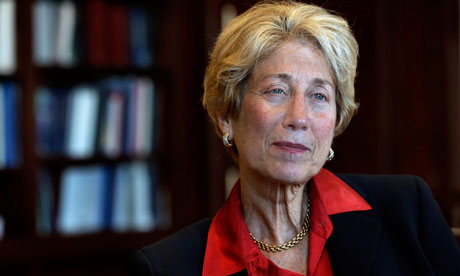
REPOST: Stop-and-frisk judge fights removal from case

Read what Judge Shira Scheindlin fights for from this The Guardian article:

***

Image Source: theguardian.com
A US judge has asked an appeals court to reinstate her to a closely watched case regarding the constitutionality of the New York police department's "stop-and-frisk" tactic, saying she was unfairly removed from it a week ago.

In a highly unusual request, US District Judge Shira Scheindlin asked the 2nd US circuit court of appeals to reverse its ruling of 31 October when a three-judge panel removed her from the case, saying she "ran afoul" of the judicial code of conduct in part by granting media interviews.

Two months ago Scheindlin became a hero of civil rights and civil liberties groups when she struck down parts of stop-and-frisk, ruling that it amounted to "indirect racial profiling" that resulted in the disproportionate and discriminatory stopping of black and Hispanic people.

In that ruling she also appointed a federal monitor to oversee changes in NYPD practices.

The city appealed and the appeals court ruling last week to remove her from the case and to freeze her decision was at least a temporary victory for Mayor Michael Bloomberg and the NYPD. The city has argued that stopping, questioning and frisking suspicious people has led to a steep decline in crime rates.
The issue played a role in the campaign for mayor of New York City in which candidate Bill de Blasio, who won in a landslide on Tuesday, blasted stop-and-frisk as unfair.

The three-judge panel's ruling had no implications for the merits of the case and instead was a rebuke of Scheindlin. The judges said they would rule on the merits of the case upon hearing the city's appeal of Scheindlin's ruling next March.

Scheindlin, in the motion filed on Wednesday by her attorney, Burt Neuborne, noted that the judge had never been accused of running afoul of the code of conduct by any of the parties in the case at the district court level, nor in oral arguments before the appeals court.

Moreover the appeals court should have notified Scheindlin in advance that it intended to disqualify her and she should have been given a chance to respond before the ruling was made, her lawyer said in the court brief.
"Since nobody asked for her disqualification, and the disqualification came from the court itself, this is her chance to ask: 'Before you do this to me, let me at least get a chance to explain myself,'" Neuborne told Reuters.

***
More legal issues and updates can be found in this Atty. Evan Granowitz Facebook page.

Saturday, October 19, 2013

REPOST: Toronto paying millions in lawsuit claims

This online article talks about the different civil lawsuits faced by the City of Toronto over the years, with "slipping and falling on public property" as one of the biggest categories. Read more:

***
The City of Toronto has spent more than $200 million to settle civil lawsuits since 2000, and the payouts are getting richer, a municipal database obtained by the Star shows.
Litigants range from people alleging they were struck by golf balls to prisoners claiming they were assaulted in police custody.
The largest payment, for $4,454,909.69, stems from a 2001 incident in which a lifeguard was alleged to be at fault. The city did not release details of the case, or of any of the 3,062 settlements contained in the database. Many of the cases are covered by confidentiality agreements.
Almost one in four of the total tally — 773 — were related to road and sidewalk maintenance. Those settlements totaled $32,458,390.50.
The city’s response to inclement weather accounted for 640 lawsuits. On incident involving an icy driveway cost the city $439,345.74.
Police activity has resulted in at least 256 settlements, worth more than $27 million. That includes dozens of cases of use of force, false arrest and negligent investigation.
The city “self-insures” for all claims under $5 million — meaning it pays the claims with city money — and maintains a reserve fund to cover claims. The city buys insurance coverage to handle claims worth more than $5 million. Any claims that large would not show on the database.
Image Source: thestar.com
Shelley Carroll, who served as city budget chief from 2006 to 2010, said poor city services were partly to blame for the number of settlements.
“We’ve privatized the repair of the sidewalks that people are going to trip on,” she said.
“At a certain point do we have to ask ourselves: do we want prettier sidewalks … do we want to pay it out in the settlement — or fund it properly in the first place?”
Carroll added that the total cost of the settlements didn’t seem high.
“Two hundred million over the time span you’re looking at is not unreasonable … By and large we have reasonable lawsuits. We don’t have a nutty, litigious society like the United States.”
The number of settlements per year has not being growing — in fact, it has declined slightly — but the likelihood of getting a large settlement has increased. All five of the years with the highest average settlement have come since 2007. That includes three years — 2008, 2011, and 2012 — with an average settlement greater than $100,000. (The average for the past fourteen years, including so far in 2013, is just over $60,000.)
But Carroll said it wouldn’t be worthwhile to try to curb the amount paid in settlements.
“It’s kind of a mug’s game to set a dollar amount, because when you pay a big settlement for a good reason, it goes out the window.”
The database, which the Star obtained through a Freedom of Information request, shows the reasons the city pays out settlements in civil cases.
  • Slipping and falling is more likely to land you a settlement than tripping and falling: slips have resulted in 140 settlements, costing the city $5,230,771.35; trips have resulted in 107 settlements worth $4,657,259.75.
  • Beware the trees: arboreal misadventures are to blame for 57 settlements costing about $1.5 million. That includes 21 for trees that caused bodily injury and 36 for trees that caused property damage, though the portion of data obtained by the Star does not include descriptions of the incidents.
  • The city has paid settlements in 33 cases of discrimination leading to personal injury, amounting to $1,833,575.88.
  • The city has also settled 22 human rights complaints, including two for more than $200,000.
  • City vehicles, meanwhile, seem to engage in their fair share of bad driving, having led to 186 settlements worth almost $22 million, including 35 incidents of pedestrians being struck by city vehicles.
  • It isn’t clear what kinds of city vehicles have been involved in the collisions — whether police cars, snow plows, or TTC buses and streetcars. But the 24 settlements caused by a city vehicle entering intersections against the light suggests fire trucks and ambulances, which often run red lights.
  • The city has made 20 payouts over $1 million since 2000. 414 settlements were for six figures or more.
  • More than half of the money paid by the city in settlements is for “bodily injury”: $112,394,033.06 out of a total $202,350,522.41
  • In 2005, someone recouped a $25,000 bodily injury settlement from the city after being hit with a golf ball.
  • A 2002 sewer backup won the claimant more than $2.5 million for lost property alone. (It’s one of 92 settlements for sewer backups, totaling $6,365,371.98).
  • Legal costs also eat up a large proportion of the city’s settlement budget: more than $57,000,000 since 2000, or more than a quarter of the total cost of settling civil lawsuits incurred by the city in that time.
  • In 88 cases, the city had legal expenses in the six figures.

  • ***
    More updates on the legal sector can be read on this Evan Granowitz Facebook page. 

    Tuesday, October 8, 2013

    REPOST: After Fraud, Regulators Go After a Bank

    This New York Times article talks about the government action against TD Bank, who brought in connection with a customer's Ponzi scheme.

    You can’t run a Ponzi scheme without a bank.

    In such a scheme, money that is supposed to be invested is really used to line the pockets of the Ponzi promoter or to pay previous investors. A lot of money has to flow through bank accounts, and it flows in ways that differ from what the promoter tells investors is happening. Banks are in a unique position to notice what is going on before the money is all gone.

    But it is extremely rare for a bank to face sanctions for not noticing.

    The typical judicial attitude was expressed last year when the United States Court of Appeals for the 11th Circuit upheld the dismissal — before a trial or any discovery of evidence — of a class-action suit against Bank of America by investors who had lost money in a pyramid scheme run by a promoter named Beau Diamond.

    Even assuming that the plaintiffs could prove that Mr. Diamond “engaged in atypical business transactions, such as numerous wire transfers unrelated to any legitimate business activity,” the appellate court ruled, that would not be enough. The allegations in the suit were insufficient to render “plausible” a conclusion that the bank had “actual knowledge” of what Mr. Diamond was doing, so there was no need for a trial.

    See no evil, face no liability.

    That is why a joint regulatory action filed last week by the Securities and Exchange Commission, the Office of the Comptroller of the Currency and the Financial Crimes Enforcement Network, a part of the Treasury Department, seems so noteworthy. TD Bank, an American subsidiary of Canada’s large Toronto-Dominion Bank, agreed to pay $52.5 million to settle accusations that it had helped a Florida lawyer named Scott W. Rothstein commit one of the more brazen Ponzi schemes of recent years.

    It is not clear, however, whether this represents a new attitude on the part of regulators to try to force banks to pay attention to possible Ponzi schemes — just as the Patriot Act requires them to monitor possible terrorist financing — or whether it is an isolated response to a particularly egregious case. Certainly the regulators had evidence, much of it provided by Mr. Rothstein in an effort to minimize his sentence, suggesting that one or more bank employees knew they were helping him deceive investors.

    If regulators do not go after banks, the banks are usually home free. Some bankruptcy trustees for collapsed Ponzi schemes have tried to sue banks to recover money for defrauded investors only to have judges rule that because the trustee is standing in the shoes of the fraudster, such suits are not permitted. But when investors try to sue the banks, they can run up against rules limiting class-action suits and a Supreme Court decision saying that only the government — not victims — can bring suits contending that a bank, or anyone else, aided and abetted a fraud.

    The Rothstein Ponzi scheme was created by a lawyer who had burst onto the Fort Lauderdale scene, living large and making highly publicized charitable donations. His firm, Rothstein, Rosenfeldt & Adler, employed 70 lawyers. He was vice chairman of a Florida Bar Association grievance committee that heard ethics complaints against lawyers. He was named to a committee to advise on state judicial appointments.

    And he put together a $1.2 billion Ponzi scheme, according to the federal charges to which he pleaded guilty.

    His scheme involved persuading investors to put money into “structured settlements.” Supposedly, these were settlements of cases that involved complaints like sexual harassment. The companies, he explained, had agreed to pay money over time to his clients in return for their silence. Those clients would sell the right to the payments in return for an upfront payment from the investor. He assured the investor that all the money had in fact been paid into escrow accounts he administered.

    He spread the profits of the Ponzi scheme around, according to the federal charges, using money to “provide gratuities to high-ranking members of police agencies in order to curry favors with such police personnel and to deflect law enforcement scrutiny.” Political contributions were made with the money “in a manner designed to conceal the true source of such funds and to circumvent state and federal laws governing the limitations and contribution of such funds.” He sponsored fund-raisers for, among others, Gov. Charlie Crist, Senator John McCain and President George W. Bush.

    For their first wedding anniversary, in 2009, he and his wife, Kimberly, attended an Eagles concert, where Don Henley dedicated a song, “Life in the Fast Lane,” to them. That cost him a $100,000 charitable contribution.

    He kept a lot of the money for himself. After he was arrested, the government seized his car collection, which included four Mercedeses, three Ferraris, three Corvettes, two Rolls-Royces, one BMW, one Bentley, one Hummer, one Cadillac, one Bugatti, one Maserati, one Lamborghini and one Ford.

    And he couldn’t have done it without the help of his bank.

    At the time the Ponzi scheme began, he was using a small bank, Gibraltar Private Bank and Trust. He later testified that he had “protection” from officers at that bank but that he was upset by the “amount of scrutiny we were getting from certain due diligence folks” at the bank’s headquarters. And as he began to persuade large investors, including hedge funds, to invest, some of them wanted him to use a larger bank to protect themselves from a possible bank failure while the bank held the money.

    So he moved to Commerce Bank, which was later acquired by Toronto-Dominion. The Canadian bank kept Commerce’s slogan, “America’s most convenient bank.” Its systems generated warnings of suspicious activity, but the bank ignored them, thanks to an extremely cooperative bank officer, Frank A. Spinosa.

    According to an S.E.C. suit filed against him last week, Mr. Spinosa falsely assured investors that only they could get money from accounts that he said held millions.

    Mr. Spinosa’s lawyer, Samuel J. Rabin Jr., says his client “did not know about the fraudulent conduct perpetrated by Scott Rothstein” and “never purposefully acted in any way to advance Scott Rothstein’s many schemes.” In an interview, he painted his client as a salesman who did favors for an important customer who promised to introduce him to other people who could become big customers of the bank.

    TD Bank initially disclaimed any responsibility, and it bitterly fought a suit filed by Coquina Investments, which lost more than $30 million in the scheme. The bank is appealing a jury verdict that ordered it to pay Coquina $67 million in damages, including $35 million in punitive damages. Mr. Spinosa cited his Fifth Amendment right against self-incrimination in refusing to testify in that case.

    It later turned out that lawyers for TD had withheld evidence in the case and misled the judge in a number of instances. As punishment, the judge ordered the bank to pay Coquina’s legal fees.

    The bank has since settled other cases filed by victims. Altogether, the mess has cost it $500 million, according to a report in The South Florida Business Journal, although the bank declined to confirm the figure. As a result of the bank’s payments, said Jordan Maglich, a Florida lawyer whose blog, Ponzitracker.com, follows such cases, “This is the first time I can recall that victims are getting 100 percent of their money.”

    Mr. Rothstein is serving a 50-year prison sentence, and eight others have been sentenced to prison terms. Other cases are pending and Mrs. Rothstein will be sentenced next month after pleading guilty to charges she tried to hide $1 million worth of jewelry, including a 12-carat diamond ring, from federal marshals seizing her husband’s assets. She is expected to receive a prison sentence.

    TD Bank says it has improved its procedures, which certainly seems appropriate. Perhaps, even if this case does not herald a wider crackdown by authorities, it will persuade other banks that ignoring signs of a Ponzi scheme is no longer a safe thing to do.

    More legal updates may be found at this Evan Granowitz Facebook page.

    Friday, October 4, 2013

    Employee lawsuits: Handle with care

    For many small businesses owners, the fastest way to deal with employee lawsuits is to settle. Giving in to the demands of the aggrieved party is seen as less of a problem than having to deal with litigation, even if the company did not actually break any laws.

    Image Source: michaelhyatt.com

    While many business owners may see legal hazards as a normal part of business, legal recourses are not the only way to handle matters related to employee complaints. Prevention is worth more than the cure and it is better for small companies to prevent issues from escalating to the point where court arbitration is necessary.

    Knowing that the truth is on the company’s side should give the business owner an edge in handling employee complaints and lawsuits. This can be achieved by making sure that the company has complied to the letter with all the requirements of state and federal governments.

    Image Source: bizjournals.com

    Meanwhile, business owners should also ensure that all employee-related matters are handled with utmost care. Employees must know what is expected of them and they must also know when they are not meeting the company’s standards. While not required by law, small businesses can also document every instance of disciplinary action to help prove that termination, should it be the case, is justified.

    Image Source: nbcmontana.com

    Finally, how erring employees are treated at the moment of termination can affect how they react to the notice. Taking measures to ensure that the employees feel the process had been fair can reduce friction and make the separation possibly amicable.

    Atty. Evan Granowitz is one of the lawyers of the Wolf Group LA. Follow this Twitter account for more resources about business litigation.

    Friday, September 27, 2013

    REPOST: Michael Jackson death trial: Jury to resume deliberations Friday

    Is the case of Michael Jackson's wrongful-death slowly coming to a close? Read the latest on this issue from this CNN article.


    ***

    Los Angeles (CNN) -- Jurors began deliberations Thursday in the Michael Jackson wrongful-death trial, potentially bringing the contentious case to a close after five months of testimony and three days of closing arguments.

    The 12 jurors spent two hours in the jury room Thursday afternoon before ending their day; they will return Friday morning for more deliberations.

    Katherine Jackson's lawyer delivered his final arguments in the AEG Live trial Thursday morning, delivering his rebuttal to defense closing arguments.

    AEG Live's Marvin Putnam had asked jurors to find Michael Jackson responsible for his death, not the company that promoted and produced his comeback concerts in 2009.

    Jackson's mother and three children are suing AEG Live, contending the company was liable in the pop icon's drug overdose death because its executives negligently hired, retained or supervised Dr. Conrad Murray.

    "Plaintiffs want you to hold a concert promoter liable for Michael Jackson's overdose in his bedroom at night, behind locked doors on June 25, 2009," Putnam told jurors. "An overdose of the drug administered to Mr. Jackson by his longtime doctor -- Dr. Murray -- who he'd been seeing for years, a doctor he brought to Los Angeles from Las Vegas."

    "How dare they come up here and accept no responsibility and blame it all on Michael," Jackson lawyer Brian Panish said in his rebuttal.

    Panish suggested that Jackson's share of blame was 20%, "but the rest goes on AEG."

    When the trial began five months ago, Putnam warned he would show "ugly stuff" and reveal Jackson's "deepest, darkest secret."

    The revelations that jurors heard from 58 witnesses over 83 days of testimony spanning 21 weeks included details of Jackson's drug use and his shopping for a doctor to give him the surgical anesthetic propofol that he thought would give him sleep.

    "He was nearly half a billion dollars in debt," Putnam argued Wednesday. "His mother's house was near foreclosure, we didn't know that then. What else do we know now? That Mr. Jackson spent decades shopping for doctors to give him the painkillers he wanted. Mr. Jackson made sure we didn't know that."

    Panish, the lead Jackson lawyer, conceded in his closing Tuesday that the singer may have some fault for his own death, but said "it's about shared responsibility."

    Jackson did use prescription painkillers and was warned that using propofol at home to sleep was risky, "but he never had a problem until Dr. Conrad Murray was working and until Conrad Murray negotiated with AEG Live," Panish argued.

    Who's to blame for Michael Jackson's death?

    The AEG Live lawyer argued Wednesday that Jackson should take the full blame. "The sad truth is Mr. Jackson's death was caused by his choices and it would have happened no matter what -- with or without AEG Live."

    The Jackson lawyer urged jurors to award the family between $1 billion and $2 billion in damages for what he called AEG Live's share of liability in Jackson's death -- to replace what Jackson would have earned touring, had he lived, and for the personal suffering from the loss of a son and father.

    Putnam told jurors Wednesday that was "an absurd number."

    Katherine Jackson testified that she filed the wrongful death lawsuit three years ago against AEG Live "because I want to know what really happened to my son."

    Murray was convicted of involuntary manslaughter in Jackson's propofol overdose death.

    The judge is allowing a television camera in court for the closing arguments and verdict.

    Lawyer: Blame Jackson for his death, not AEG Live

    Burden of "Poof"

    Panish -- a former college football player who has a reputation for winning large damage awards -- appeared more aggressive in his rebuttal than in his initial closing arguments delivered Tuesday.

    In what may become a much-repeated video highlight, Panish joked about how his AEG LIve counterpart had accused him of making up the estimate of $59 million that MIchael Jackson could have been expected to have given his mother and children in support had he lived.

    "Poof! Poof! I just made it up!" Panish said dramatically as he pointed to Putnam, sitting at the AEG Live defense table. The line and gesture drew a laugh from some jurors.

    Panish showed jurors that the figure was actually from a opinion provided by a financial expert that AEG Live hired to analyze the issue.

    Putnam, in his closing Wednesday, referenced the expert's lower-end estimate of $21 million. The numbers could be important in guiding the jury if it decides to award damages to the Jacksons.

    AEG Live's defense

    Murray treated Michael Jackson and his children for minor illnesses while they lived in Las Vegas for three years, before the singer returned to Los Angeles to prepare for his "This Is It" comeback tour. It was Jackson -- not AEG Live executives -- who chose Murray to be his full-time doctor for his tour, the company's lawyers contend.

    AEG Live Co-CEO Paul Gongaware negotiated to pay Murray $150,000 a month only because of Jackson's request to have his doctor with him as he performed 50 shows at London's O2 Arena, they argue.

    "He told them 'We're bringing this doctor,' " Putnam said. "This was a choice Mr. Jackson made. He was a grown man."

    AEG Live executives tried to talk Jackson out of taking an American doctor with him on tour, suggesting he could save money by using a physician in London, Putnam said.

    "But Mr. Jackson was undeterred," he said. "Ultimately, it was his money, his doctor, his choice. He certainly wasn't going to take 'no' for an answer."

    There was no need to check Murray's background because he was a licensed, successful doctor who was known to Jackson, Putnam said. "All AEG Live knew was Dr. Murray was Mr. Jackson's longtime doctor."

    A key argument in the Jackson case is that AEG Live was negligent by not ordering a financial background check of Murray, which would have revealed he was in a dire financial situation and not successful. His desperation to keep his lucrative job led Murray to violate his Hippocratic Oath to do no harm by using the dangerous propofol infusions to put Jackson to sleep each night for two months, Jackson lawyers argue.

    AEG Live executives had no way of knowing Murray was treating Jackson's insomnia with propofol in the privacy of his bedroom, their lawyers contend. Jackson was a secretive addict, adept at keeping family, friends and other doctors in the dark about his medical treatments, they argue.

    But two doctors testified that they told Gongaware about Jackson's abuse of painkillers and his insomnia during tours in the 1990s, when the AEG Live executive served as tour manager. Jackson lawyers argue Gongaware, who was the top producer on the new tour, should have known that Jackson could suffer the same problems in 2009.

    The deterioration of Jackson's health over the two months he was being treated by Murray was a red flag that there was a problem, but AEG Live executives negligently ignored the warning, Jackson lawyers argue. By June 19, he was frail, suffering chills, unable to do his trademark dances and paranoid, according to testimony.

    "Everyone believed at the time that a 50-year-old man, who hadn't performed in a decade was tired, out of shape and very nervous," Putnam argued Wednesday. "That's what they believed at the time and it makes sense."

    AEG Live would avoid a negative verdict if it is able to convince at least four of the 12 jurors that it did not hire Murray. It is the first of 16 questions on the jury verdict form. If jurors answer it with a "no" -- that AEG Live did not hire the doctor -- they would end their deliberations and the trial.

    An AEG Live lawyer e-mailed an employment contract to Murray on the morning of June 24, 2009. Murray signed it and faxed it back to the company that day. But the signature lines for AEG Live's CEO and for Michael Jackson were never signed since Jackson died the next day.

    But Panish, the lead Jackson lawyer, told jurors Tuesday that all the elements of an oral contract -- "just as valid as a written contract" -- were in place when Jackson died.

    Murray had been treating Jackson for two months and the written contract stated that his start day was May 1, 2009. A series of e-mail exchanges involving Murray and AEG Live executives and lawyers support this argument, Panish said.

    A look at the life of Michael Jackson

    Blame and damages

    If the jury concludes AEG Live has liability, it would have to decide how much the company should pay in economic and personal damages to Jackson's mother and children. They can use estimates of Jackson's "lost earnings capacity" -- the amount of money he could reasonably be expected to have earned if he had lived -- to guide them.

    AEG Live expert Eric Briggs testified it was "speculative" that Jackson would have even completed another tour because of his drug use, damaged reputation and history of failed projects. He suggested the star may never have earned another dime.

    Putnam's closing argument about damages must overcome the impression left on jurors Tuesday, when Panish played a video montage of Jackson performances.

    "That is, I think, the best evidence of if Michael Jackson could have sold tickets -- not what Mr. Briggs would tell you," Panish told jurors.

    Panish suggested jurors pick a number between $900 million and $1.6 billion for economic damages. They should add on another $290 million for non-economic damages -- or personal damages, he said.

    Putnam argued that the number, if the jury finds AEG Live liable, should be closer to $21 million, the amount of money AEG Live's expert calculated Jackson would have given his mother and three children over the next 16 years. He couldn't have given them more because he had a $400 million debt that was getting deeper, he said.

    "If Mr. Jackson had lived, it's hard to see how he would ever have dug himself out of that whole," Putnam said.

    The last question on the verdict form asks jurors to assign a percentage that they believe represents Michael Jackson's share of blame in his death. The total damages owed by AEG Live would be reduced by that percentage.

    While AEG Live lawyers did not suggest a percentage, Panish suggested jurors reduce the damage award by 20% to reflect Jackson's share of blame.

    Michael Jackson's mom remembers her 'sweet little boy'

    ***

    More legal issues and news are shared in this Evan Granowitz blog site. 

    Friday, September 20, 2013

    Repost: Task Force Backs Changes in Legal Education System

    A report that takes a look into the practice of most law schools in terms of providing little aid to needy students is currently in the works. Read this New York Times article for the details.
    ***

    Faced with rising student debt and declining applications to law schools, a task force of the American Bar Association is calling for sweeping changes in legal education, including training people without law degrees to provide limited legal services and opening the bar to those who have not completed four years of college and three years of  law school.
    The report, to be issued on Friday, does not refer specifically to President Obama’s suggestion last month that law schools mightlimit classes to two years, and have students spend their third year clerking or practicing in a firm. But it did recommend the elimination of the rules that law students must have 45,000 minutes in a classroom to graduate and that they cannot get credit for field placements that are paid.
    The report describes an urgent need for change in the nation’s legal education.  
    “The system faces considerable pressure because of the price many students pay, the large amounts of student debt, consecutive years of sharply falling applications, and dramatic changes, possibly structural, in the jobs available to law graduates,” it said.  “These have resulted in real economic stresses on law school, damage to career and economic prospects of many recent graduates, and diminished public confidence in the system of legal education.”
    It called  the predicament of the many recent graduates who may never get the kind of jobs they anticipated  “particularly compelling.”
    The report is still a draft, to be distributed for comment, then considered at the bar association’s 2014 meeting. If adopted there, it will be influential but not binding on either law schools or state bar associations.
    Randall T. Shepard, the former Indiana chief justice who was chairman of the task force, said that within the group, the most controversial sections were those dealing with how legal education is financed and with the accreditation standards.
    The report criticizes the practice of most law schools to provide little aid to needy students, reserving most of their scholarships for those with the highest credentials in part to help raise the school’s rankings.
    “There were very prickly long discussions about whether the language in the report accurately describes the situation,” Mr. Shepard said. “The other issue where there was real disagreement was on the list of items in the accreditation standards that we thought should be liberalized or eliminated.”
    Among the items on the list are  the standards on credit  for  work  before law school matriculation, distance education, student-faculty ratios, the proportion of courses taught by full-time faculty, tenure, physical facilities and more.
    The overall idea, said James. B. Kobak Jr., a New York lawyer on the task force, was to free law schools to be more innovative and get away from the one-size-fits-all model.
    But Leo P. Martinez, a task force member who is president of the Association of American Law Schools, said that while he generally embraced the idea of encouraging heterogeneity among law schools, he thought the standards helped to ensure an “irreducible minimum of quality.”  
    Mr. Shepard said that there had been little controversy over the use of  nonlawyer practitioners, in part  because the members were so impressed by Washington State’s experiment with limited-license legal technicians, trained and licensed to handle certain civil legal matters. That program’s success has led to an expansion to practitioners for domestic relations, an area in which many of those who come to court are now unrepresented.
    The report, citing the wide variety of colleges in the United States, called for more differentiation and experimentation by law schools.  It  also recommended the  creation of national standards for admission to the bar.
    ***
    Interesting news and articles on the legal arena can be found in the Evan Granowitz blog site.