Wednesday, January 23, 2013

Law school 101: Recommendation in choosing classes


After finishing the 1L year of law school where everyone is required to take up general prerequisites, law students are now given the freedom to choose their own classes. At this point, law students are left to fend for themselves amid the increasingly difficult course requirements. One of the most important things that a law student must remember before taking on the 2L law school year is that tentative strategies are indispensable for the rest of law school.


Image Source: coedmagazine.com

Even at an early point, students must already choose their particular area of interest. This will define their professional career as lawyers are usually known by their specialization. For instance, Atty. Evan Granowitz is known to specialize in appellate practice, while Atty. Philip Ripley Birney is known to specialize in medical professional liability. Having some sort of concentration can also help ease unnecessary academic burden and make one’s grades higher.

In addition, online law student portal Law School Coach recommends the following strategies in choosing law school classes:

1. Taking extra hours during the 2L law school year than what is normally required will free up a lot of time for the 3L law school year.

2. Taking up classes on ‘evidence’ and other required law courses during the 2L law school year is recommended. Because many law school clinics and prospective employers require ‘evidence’ to be completed, it’s better to ensure its accomplishment by loading up early on.

3. Students must fulfil all writing requirements during the 2L law school year.


Image Source: businessinsider.com

4. Students must not assume that all courses are available in all semesters. Once an interesting course is offered, they must grab the chance immediately.

5. It is recommended to take summer classes to lighten one’s work load later on. A recommended course for summer classes is ‘professional liability,’ which allows students to sit for the August MPRE while the material is still fresh in their memories.

6. Exam schedules should always be taken into consideration before signing up for classes. It is important to remember, however, that most schools usually move an exam if the student has two exams scheduled on the same day or if a night exam is followed by a morning exam. 7.


Image Source: blogs.windsorstar.com

Atty. Evan Granowitz is a California-based litigator. Access more law-related updates by following this Twitter page.

Sunday, January 20, 2013

REPOST: THQ files for bankruptcy - Promises no disruption


 This Forbes article talks about THQ Inc.'s filing for bankruptcy that happened last month.
 

Image Source: knickledger.com


News long anticipated arrived Wednesday, with the announcement that THQ Inc and its subsidiaries have filed voluntary petitions for bankruptcy under Chapter 11 of the US Bankruptcy Court for the District of Delaware. It also announced its plans to sell the company entire.

Affiliates of Clearlake Capital Group have agreed to act as the “stalking horse” by submitting a $60m bid for the troubled game manufacture under an Asset Purchase Agreement. Other potential buyers will be able to submit bids once the court has approved.

gChairman and CEO Brian Farrell said of the announcement:

The sale and filing are necessary next steps to complete THQ’s transformation and position the company for the future, as we remain confident in our existing pipeline of games, the strength of our studios and THQ’s deep bench of talent.

Which is to say, THQ is worth more to its creditors alive.

Section 363 – didn’t they do Halo 4?

This is a standard “Section 363″ procedure – essentially allowing the assets of a stricken company to be purchased free and clear of the debts attached to them. Clearwater’s offer is an aggregate totalling $60 million, including $10 million in consideration for THQ’s existing creditors.

If the court agrees – which seems likely – there will follow an auction process, with the assets going in all probability to the highest bidder. The ultimate owner will be decided by the court, although the high bid, as long as it is in the interest of the creditors, is likely to prevail.

The expectation is that this figure will provide a guide to other possible buyers of a bottom level for acceptable bids – Clearlake will not be expecting actually to buy THQ. Given that the company’s market capitalization is currently hovering around $8.5m, this suggests that there is a sense that THQ has more value whole and functional than its current share price, which has been badly affected by its financial instability, suggests.

The devil in the details

Interestingly, THQ’s press release says that there are no plans to reduce workforce during the period covered by Chapter 11, and working schedules will be maintained – again, the subtext of this statement is that THQ has value as a going concern. The pipeline of games will also, THQ claims, be unaffected. Clearlake and Wells Fargo are providing $37.5 million of “debtor-in-possession” funding during the period before any sale, which THQ are hoping can be concluded in 30 days. Wells Fargo had already declined to exercise its right to take action after THQ could not comply with the covenants of its credit agreement earlier this year.

In practice, this petition is an argument that the best hope for its creditors is some sort of negotiated solution, with THQ whole, competent and able to create and sell video games, rather than have it reduced to a collection of expensive computer equipment and reassignable IPs.

About those games

THQ’s problem and its resolution are in many ways the same. After a disastrous experiment in hardware with the uDraw drawing tablet, THQ wrote off large amounts of unsold inventory (uDraw tablets are now available for pocket change) and lost the confidence of many investors and customers. This was not helped by middling sales and the loss of the UFC franchise to EA, itself announced during a 2012 E3 event which also saw layoffs at THQ San Diego. The underperformance of Darksiders II, which received positive critical notices but failed to meet sales targets, may also have been a significant factor.

Speaking at THQ’s Q3 earnings call, President Jason Rubin said:

Observing this and other recent industry releases, one is left with a firm understanding that in the current marketplace, only the absolute top tier of releases is making impact on the game consumer. I now have an opportunity to start impacting our next slate of products and positioning them to compete in this marketplace.


This remains its challenge. THQ has promising games upcoming – in particular Metro: Last Light and South Park: The Stick of Truth. Neither is likely to do Call of Duty numbers, but both represent opportunities for profit by a new owner. Also in the pipeline are Company of Heroes 2 and the next game in the WWE franchise, which tend to be steady earners.

Conclusion

Some see THQ’s plight as a simple case of overreach – with the uDraw, and also with a series of games of wildly varying quality based on TV and children’s entertainment licenses. THQ’s Jason Rubin declared a return to focusing on core games on his appointment as President, but some of these retained projects retain a dubious scent; a sequel (in name, at least) to the underperforming Homefront planned for 2014 may find its prospects being scrutinized by any potential buyer, although Crytek’s involvement as developers may help its chances.

Others, however, question whether THQ is ultimately well-designed for the current financial climate of games. Whereas EA and Activision have scale and reliably profitable franchises, THQ has been badly affected by its recent bad run – not least reflected in a market cap that has fallen from a high of $2 billion in 2007 to its current level. A major games company could step in at a relative bargain price, and the licenses still held by THQ make a tempting package. Alternatively, private equity could seek to work its promising portfolio for profit – but the long-term future of its studios would be open to question.

Nicholas Lovell, Founder of Gamesbrief and video game consultant, sees THQ’S fall as an inevitable consequence of the narrowing AAA market: with EA and Activision (and to a lesser extent Take-Two Interactive) having franchises guaranteed to sell, THQ simply could not compete.

[THQ] owns no ‘must-have’ IP, just some ‘nice-to-have’. If the market is coalescing around 10-20 major titles a year, does THQ have any contenders?


This is a problem – Saint’s Row is a reliable money maker for THQ, but in a year with a new Grand Theft Auto game it may find its thunder stolen.Homefront was supposed to be THQ’s Call of Duty: Modern Warfare, but did not reach those heights. Metro 2033 was a surprise hit, and its sequel a subject of high hopes. And South Park is a great license, with a fine studio attached, but is not proven in the market. Arguably, THQ had to made a play for the AAA space, and could not absorb the costs when it fell short without the scale or market power of its larger rivals.

THQ risked delisting from the NASDAQ in July, but its ticker will now almost certainly be delisted within the next nine days.

Evan Granowitz is one of youngest and most reputable civil litigators in Southern California. Follow this Twitter page for more information.

Thursday, January 17, 2013

Dealing with foreclosures

Image Source: Google.Images.com

Foreclosure is a legal process where the lender attempts to recover the balance from the borrower who has stopped making the payments by forcing the sale of a property or an asset used as collateral for the loan.

Generally, a lender obtains a security interest from a borrower who mortgages an asset to secure the loan. If the borrower fails to pay the loan, the lender can have a claim on the property pledged as collateral. Through foreclosure, the lender terminates the equitable right of redemption of the borrower and assumes that right to the property. And while foreclosure may signal an end for borrowers, there are some alternatives that may help them deal with foreclosure.

Image Source: MiamiBeach411.com
1. Mortgage reinstatement  

This requires the borrower to pay all the missed payments. Doing so leads to the reinstatement of the mortgage agreement. In effect, the lender and the borrower are back to their roles before the foreclosure happened.

2. Forbearance

In this arrangement, the lender lowers the borrower’s mortgage for a few months. The missed payments are then added to the principal to be repaid at the end of the loan period. 

3. Loan modification

This requires modification of the monthly mortgage payment according to the capacity of the borrower to pay for the loan. Generally, loans are modified through the lowering of interest, extension of the payment period, and reduction of the principal.

Image Source: Google.Images.com
4. Deed in lieu of foreclosure

In this arrangement, the borrower signs his or her home over to the lender, but the lender cancels the mortgage. If the lender already started foreclosure proceedings, the foreclosure will then be cancelled.  

Foreclosures are difficult, tedious, and can lead to bankruptcy, but they can be dealt with.

Foreclosures and bankruptcy are areas of expertise in Evan Granowitz’s office. Visit this blog to know how they’re dealt with.

Monday, January 14, 2013

Avoiding foreclosures

Image Source: PRLog.org


The recession’s domino effect has affected personal lives. Many companies have declared bankruptcy so many have lost their jobs. In effect, a high number of Americans were faced with difficulty in paying up their loans and mortgages.

To counter this dilemma, the government has laid out programs to assist homeowners who are at risk of foreclosures and are struggling to pay their monthly mortgages. Most of these programs are made available through the U.S. Department Treasury and the Department of Housing and Urban Development (HUD).

Among the many programs designed to avoid foreclosure are:

1. HAMP (Home Affordable Modification Program)

Under this program, the monthly mortgage payment is lowered up to 31 percent of the borrower’s monthly gross income to make the payments affordable. This mortgage modification typically results to a 40 percent drop in monthly mortgage.

Image Source: HomeExpertsRealty.net


2. Principal Reduction Alternative (PRA)

PRA is specifically designed to help homeowners whose homes are worth significantly less than they owe. Under this program, investors and lenders are encouraged to lower the amount borrowed from them by lowering or reducing the principal. 

3. (UP) Home Affordable Unemployment Program

Due to the increased unemployment, many homeowners are unable to pay their mortgages. Hence UP provides assistance to unemployed homeowners by providing temporary reduction or suspension of the mortgage payments for at least a year while the homeowner sees re-employment.

Image Source: PRLog.org
4. HAFA (Home Affordable Foreclosure Alternatives)

In the event that the borrowers cannot pay the debt because it is unaffordable, HAFA provides them a means to avoid costly foreclosures. Among the options available under this program are short sale and deed-in-lieu (DIL) of foreclosure. Under the short sale option, the lender allows the borrower to sell the mortgaged property with the understanding that the proceeds of the sale may be less than the total amount of the first mortgage. In DIL, the borrower voluntarily surrenders and transfers ownership of the asset to the lender provided that the property is free of mortgages and liens.


More topics on foreclosure are available on Evan Granowitz’s blog.

Tuesday, January 8, 2013

REPOST: Driving while texting


This HG.org article talks about the statewide traffic law that prohibits drivers to use their phones while driving.

Image Source: edmunds.com
On March 8th, 2012 Pennsylvania will join 35 other states with a statewide traffic law banning texting while driving. Under Senate Bill 314, text messaging while behind the wheel will be subject to primary enforcement, which allows law officers to stop and cite offenders for that reason alone and will carry fines of $50. The new traffic law does NOT ban talking on handheld phones while driving.

Enforcing this law will present a challenge for local and Pittsburgh police. In a recent interview by, Margaret Harding of the Pittsburgh Tribune-Review, Ross police Detective Brian Kohlhepp said, “The challenge of the law is you have to see they were actually texting and not manipulating their phone for other purposes, adding that officers might be able to see someone texting if they’re driving alongside them”.

With so little experience with the enforcement of the ban, many feel that court cases will serve as guidance in this process. Only after there has been ample time to enforce the ban and numerous traffic citations issued will this learning curve be achieved. The ban on texting in Pennsylvania is meant to improve the safety of our roadways but, may be just another invasion of privacy law.

Starting March 8th, 2012, in Pennsylvania the new texting-while-driving law will begin to be enforced. Another aspect to this law is that it may be the probable cause violation leading to far more serious allegations that are raised by local and Pittsburgh police following the initial traffic stop. If you encounter such violations, consult with an attorney who concentrates in traffic law to determine your rights.

Evan Granowitz is an experienced civil litigator who counsels and represents clients in all facets of litigation. To know more of his expertise, visit this Facebook page.

Sunday, January 6, 2013

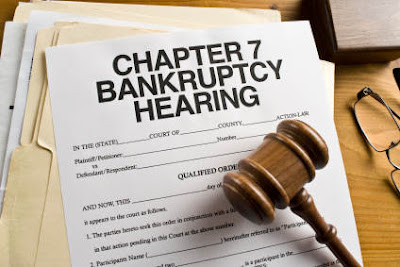
Chapter 7 bankruptcy: An overview

Image Credit: Forbes.com

At present, a lot of Americans are dealing with unemployment, and most of them do not have the capacity to pay off their loans. Day in and day out, people who are in serious debt are threatened with foreclosure and repossession. A way for these people to regain financial freedom is by filing for Chapter 7 bankruptcy.

What is Chapter 7 bankruptcy?

Chapter 7 bankruptcy is one of two bankruptcy processes that people can use to deal with creditors and get a fresh financial start. Also known as liquidation bankruptcy, Chapter 7 bankruptcy was named as such because the law is written on chapter 7 of the Federal Bankruptcy Code. In Chapter 7 bankruptcy, all debts (excluding child support, tax, and student loan debts) are cancelled, but most assets, excluding necessities, will be liquidated, i.e., sold off to pay creditors.


Image Credit: Bills.com

However, not all people are eligible to apply for Chapter 7 bankruptcy. One of the ways to be eligible is by passing the means test, which determines if a person’s income is low enough for him or her to file for Chapter 7 bankruptcy. If a person’s income is less than the state median income for a household of a certain size, then he or she automatically passes the test.


Image Credit: HonJasLaw.com

 
Although filing for Chapter 7 bankruptcy is very effective in resolving certain financial problems and can prevent one’s home from being taken away by creditors, it is not the answer to all financial woes. Lawyers well-versed with bankruptcy procedures, like Michael Benson or Evan Granowitz, advise that proper budgeting of one’s finances should still be the number one priority.

For more information, visit this website.

Wednesday, January 2, 2013

Video deposition formats - what they are and how to choose


Read this HG.org article about the variety of video formats that attorneys can choose from should they wish to have a copy of the video deposition.


This article was written to help explain the various video formats available to attorneys after conducting a video deposition.

At the end of a video deposition, a videographer usually asks counsel if they would like a copy of the video and in what format. Nine times out of ten, they have no idea that they even have a choice of format, not to mention the difference between mpeg-1 and mpeg-2 (that is, if they even know they want it in the first place!). In an effort to edify and illuminate a fairly esoteric topic, I put together a list of the most common video formats along with their corresponding strengths, weaknesses, advantages and disadvantages.

DVD/VOB 

This is your standard DVD disc. Quality can vary depending on the videographer’s settings but it is typically standard definition with little to no compression. These discs have title menus and are playable on set-top DVD players and in computers. I only mention VOB because we occasionally get requests for VOB formatted video which is essentially synonymous with DVD.

• Advantages: High quality video. Universally compatible in all DVD players

• Disadvantages: Extremely difficult to edit/make clips. Long loading time. Must be stored on a disc (can’t upload to a hard drive for quicker access and archival purposes).

MPEG-2

This is the raw, uncompressed, high-quality format that is used to author DVD/VOB discs. It is essentially the same thing as a DVD, except without menus.

• Advantages: High quality video. More easily editable. Can be made into a DVD or MPEG-1*. Can be stored easily on a hard drive. Can be synchronized with transcript and exhibits.

• Disadvantages: Requires video editing software to edit. Limited compatibility. Will not play in a set-top player and requires a special codec for playback on Window Media Player. Large file size requires approximately one disc per deposition video tape. So, for an all-day deposition where seven tapes were used, you will receive seven discs even though they are not authored DVDs.

MPEG-1

This is a compressed or “lossy” format. Although resolution is degraded, the tradeoff comes in the form of drastically increased compatibility.

• Advantages: Can be played on essentially any computer without requiring additional codecs in programs like Windows Media Player, QuickTime and RealPlayer. Smaller file sizes require less storage space. An entire day’s worth of videos can typically fit onto one DVD. Quicker load and response times. Best format for synchronized depositions.

• Disadvantages: Degraded video quality… that’s about it! I hope that was helpful. If you are still in need of further explanation, please don’t hesitate to contact our video department. We are happy to help!

Source: http://www.hg.org/article.asp?id=29197